An Institutional AI Policy for Schools: What to Allow, What to Condition and What Not to Authorize
How to build a short, applicable AI policy for a school, with three categories of use, a matrix of 16 uses for teachers, students and principals, a…
I have spent more than twenty years in the classroom teaching math and technology, and I know a teacher’s time never stretches far enough: planning, grading, paperwork, meetings — and on top of that, keeping up with tools that change every month.
This section gathers what has worked for me to make technology serve the teacher and not the other way round: using artificial intelligence to prepare materials without giving up your professional judgement, and automating admin tasks with Excel and Word so you have more time for your students.
Here you’ll find reviews of classroom tools, from AI assistants for planning and grading to platforms for teaching programming, along with analyses of education in Colombia, Latin America and the world written from the point of view of teachers, families and students.
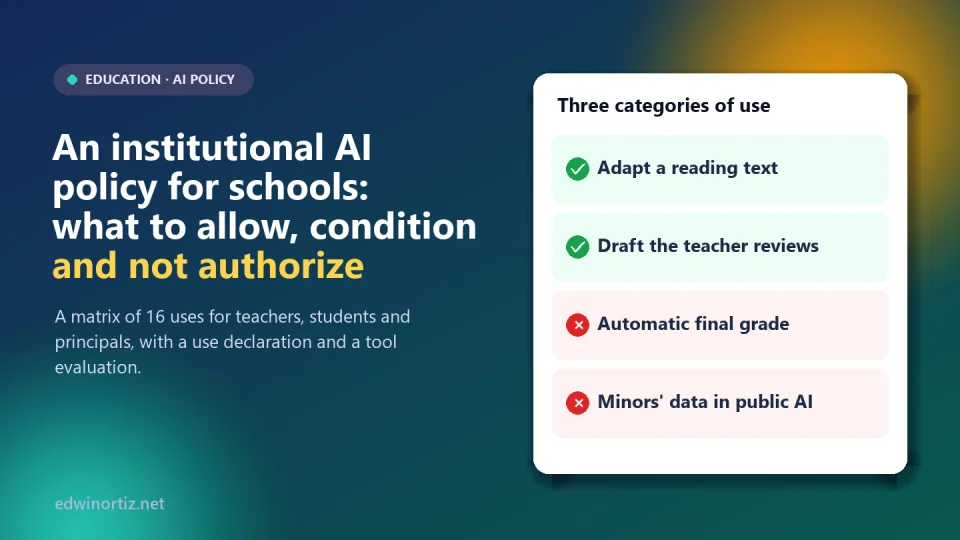
How to build a short, applicable AI policy for a school, with three categories of use, a matrix of 16 uses for teachers, students and principals, a…
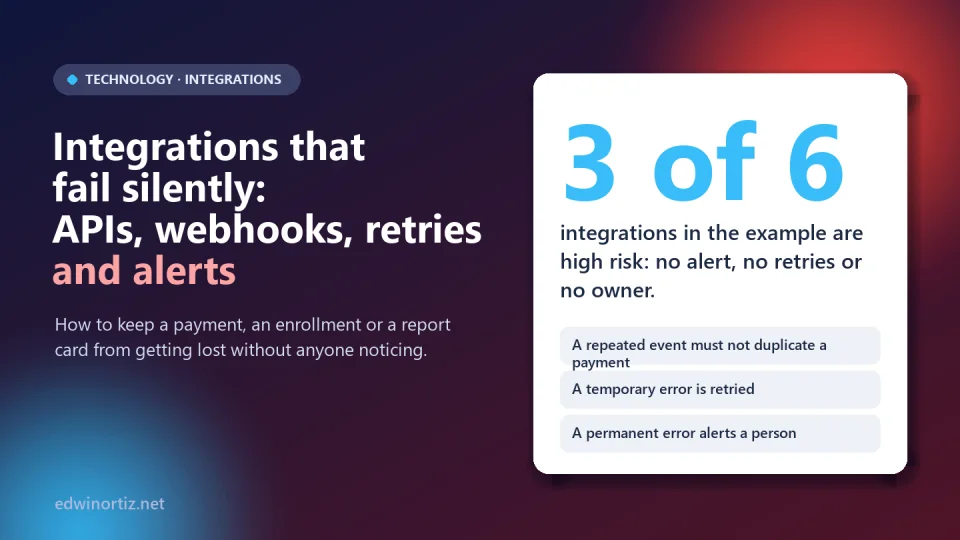
Six ways an integration fails without warning, five steps to prevent it, an executed Python demo (idempotency, retries and alerts) and an Excel…
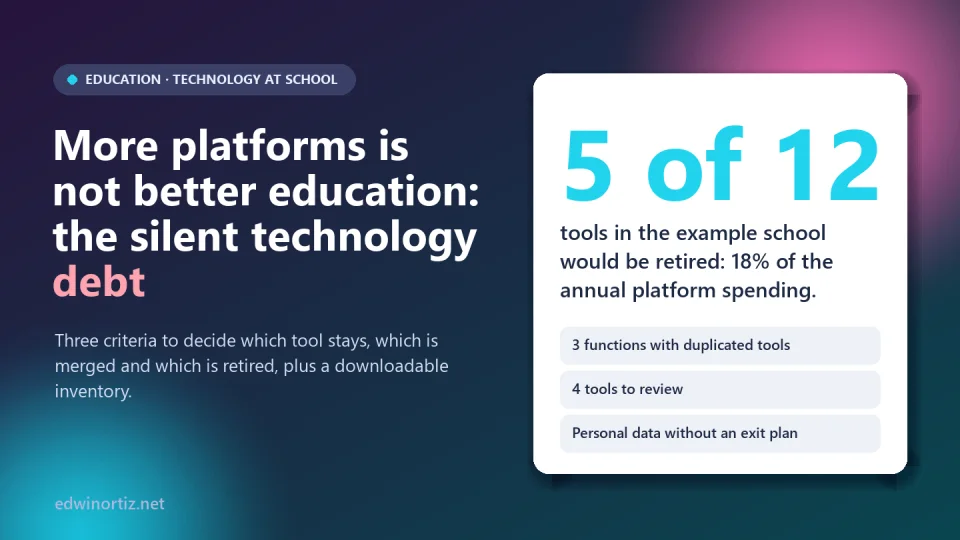
What technology debt is in a school, what the data say about tool accumulation and three criteria (integration, pedagogical value and…
The real three-year cost of buying a license, subscribing or building your own application, with a numeric case, explicit assumptions, break-even…
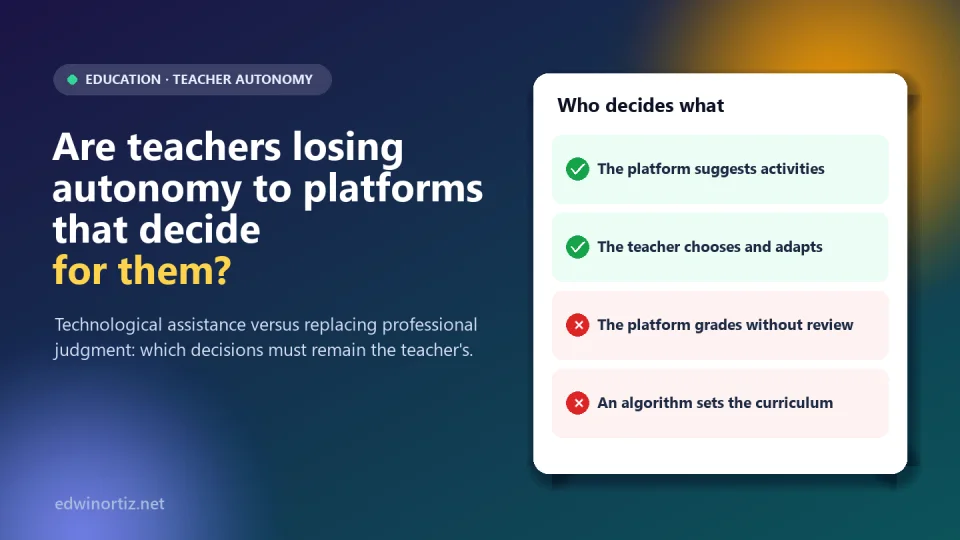
Technological assistance versus replacing professional judgment: what UNESCO evidence and the Colombian framework say, and a matrix of decisions…
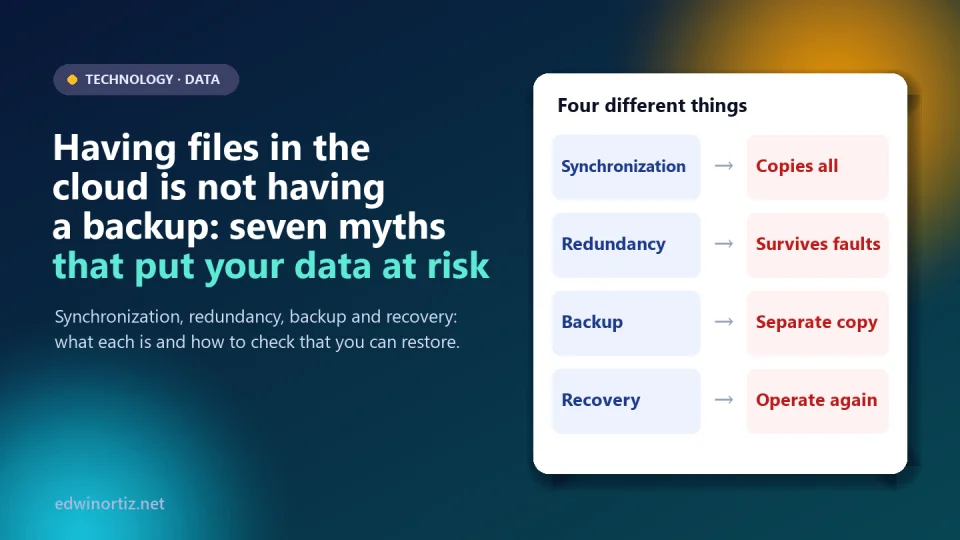
Synchronization, redundancy, backup and recovery are different things. Seven myths about the cloud and backups, the 3-2-1 rule and a script to check…
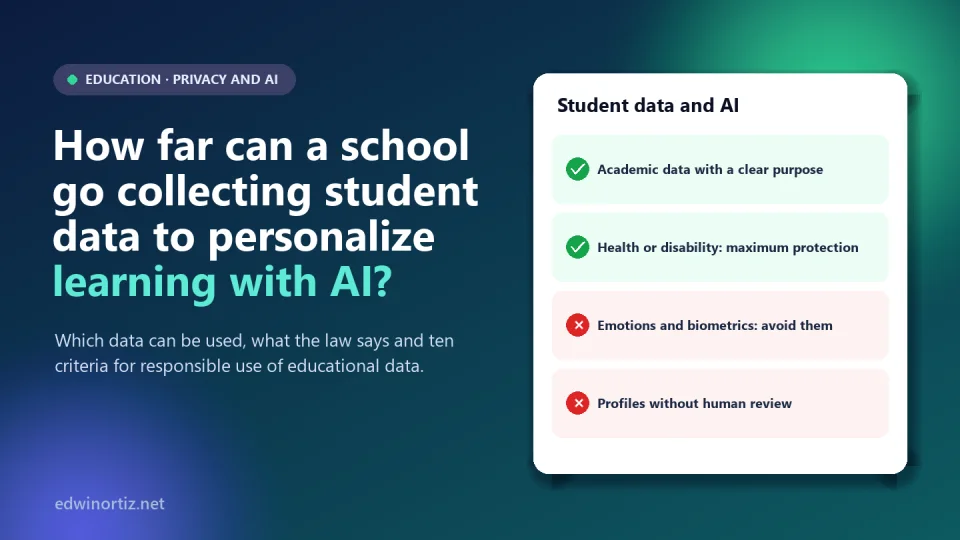
Which student data are collected, what Law 1581 and SIC Circular 002 of 2024 say, the PowerSchool case and ten criteria for responsible use of…
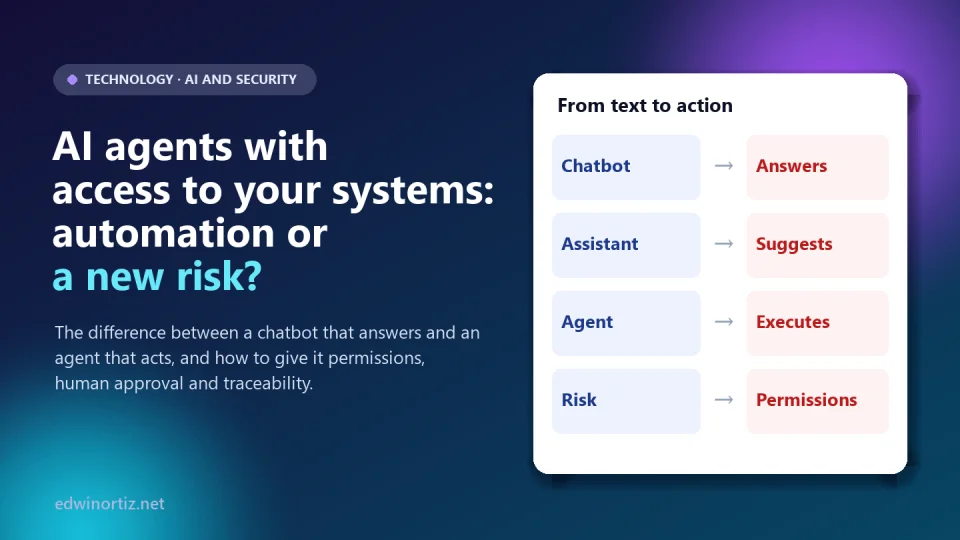
The difference between a chatbot and an agent that executes actions, real cases of excessive agency, a framework of permissions, human approval and…
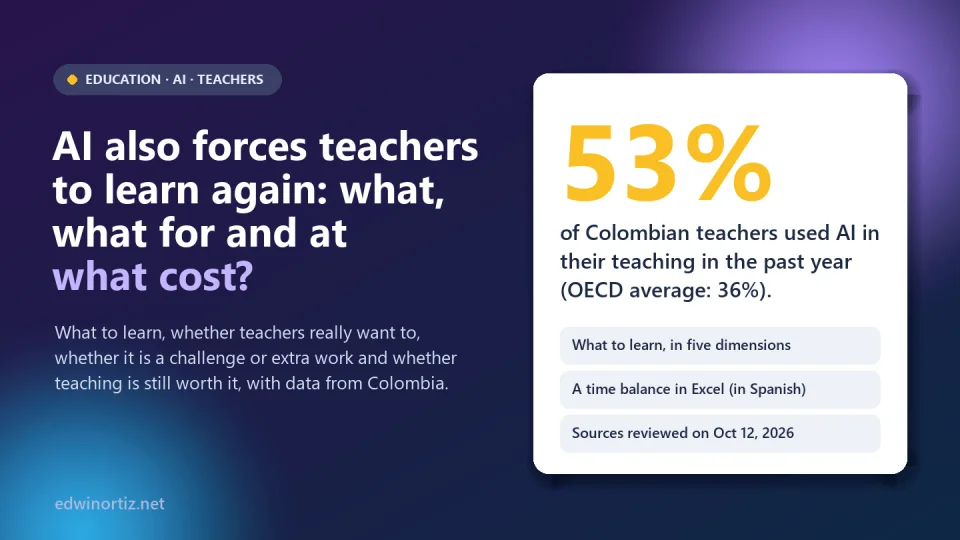
What a teacher must learn about AI, whether they really want to upskill, whether it is a challenge or extra work (with an Excel workbook) and…
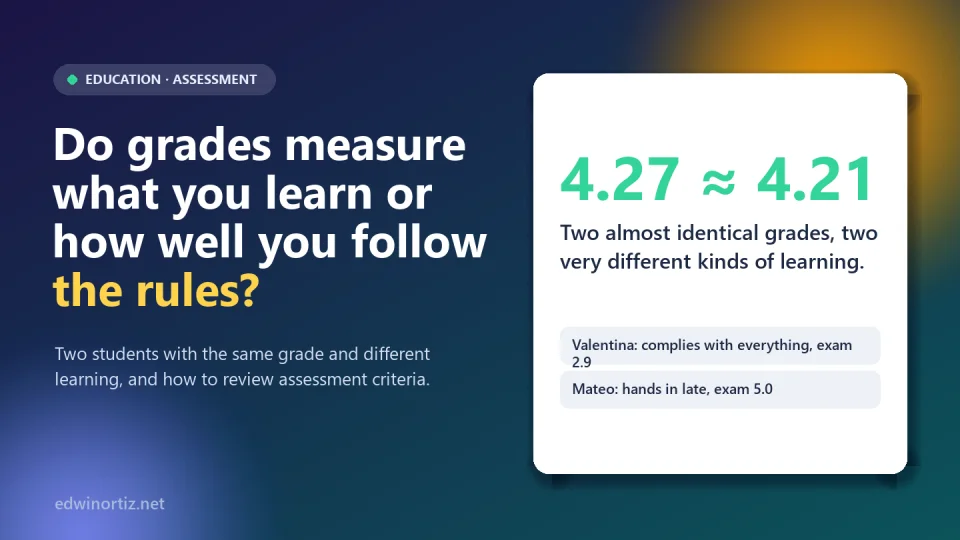
A hypothetical case of two students with the same grade and different learning, what research and rules say in Colombia, Chile and the world, and a…
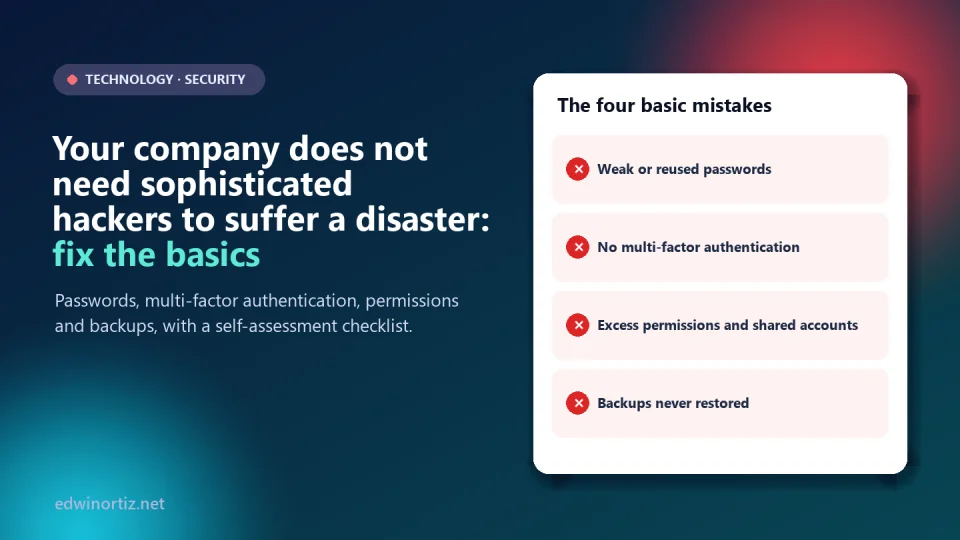
Weak passwords, no multi-factor authentication, excessive permissions and unverified backups: what the data say and a 20-point checklist to…
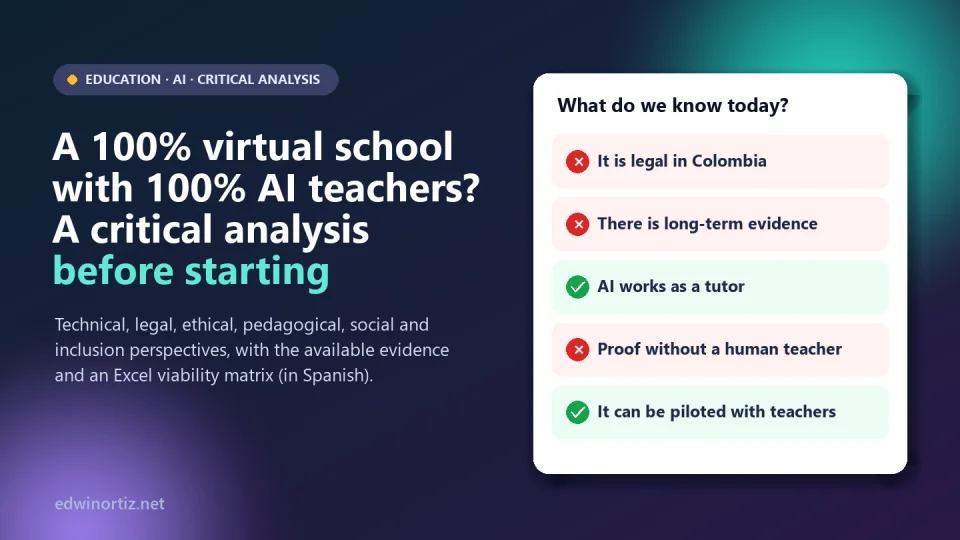
Eight dimensions (technical, legal, ethical, pedagogical, social, inclusion, economic and acceptance), the evidence for and against, what Colombia's…
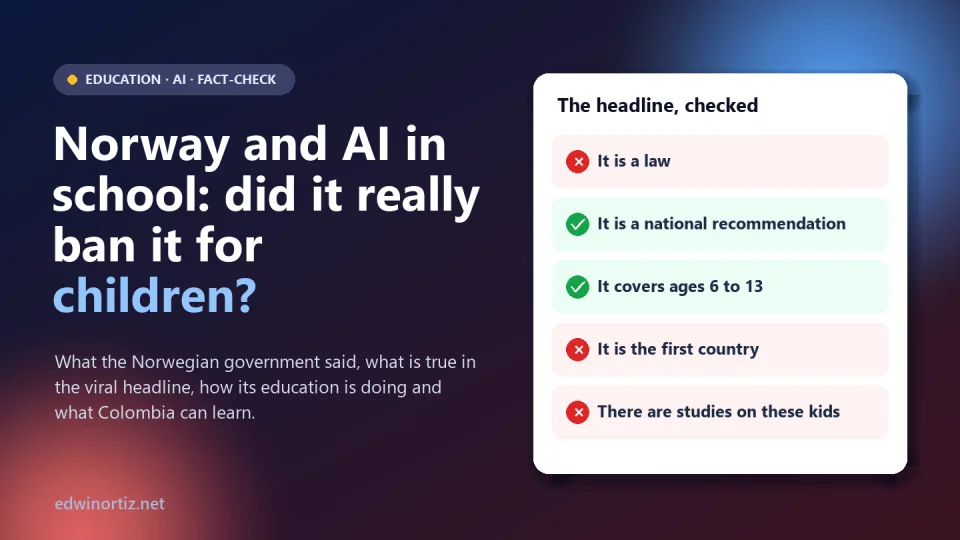
We fact-check the viral headline: what the Norwegian government said (a recommendation, not a law), how its education quality stands (PISA 2025)…
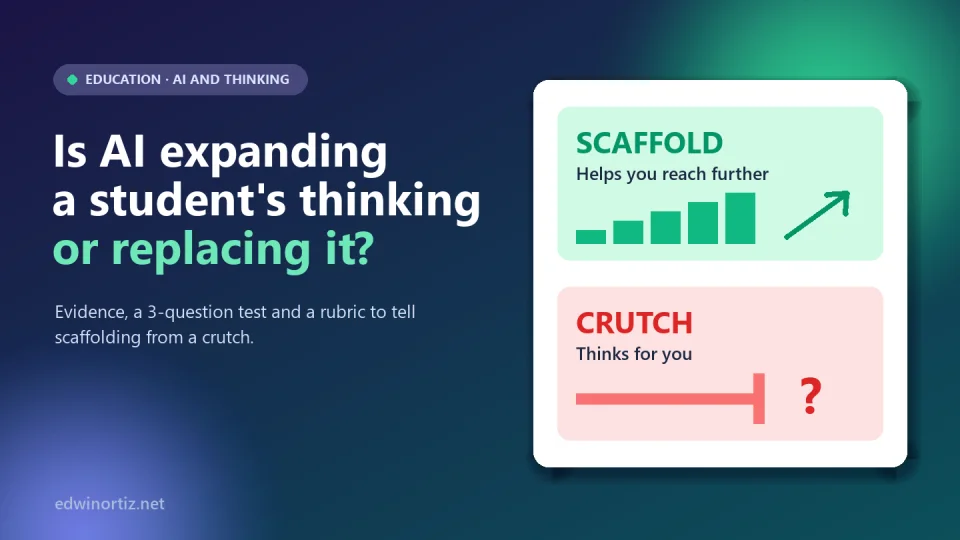
What the evidence says about cognitive dependence, how to tell support that expands learning from automation that avoids thinking, and a rubric for…
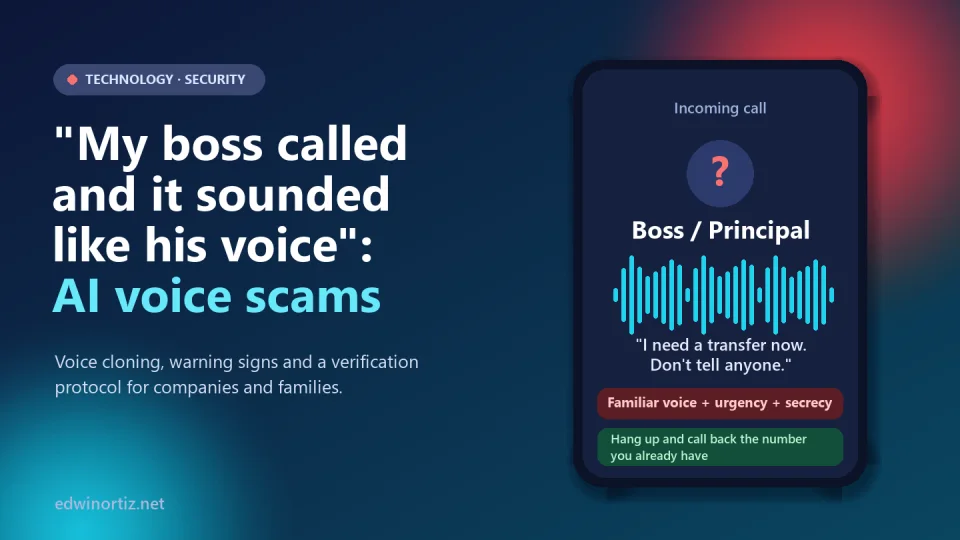
A few seconds of audio can clone a voice. What the FBI, the Arup case and Colombian figures say, the warning signs and a verification protocol for…
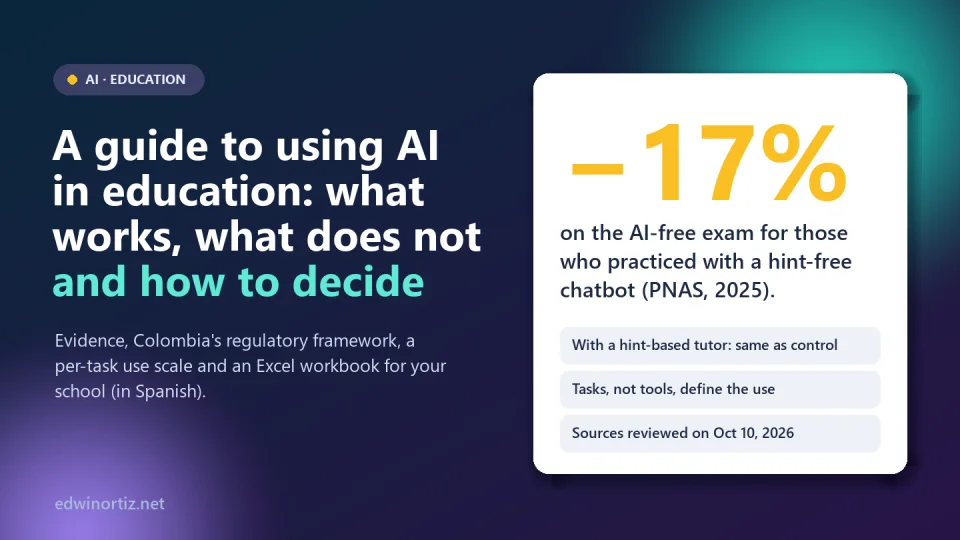
A guide to deciding on AI use in the classroom: what the evidence says (learning is not performing), the framework in Colombia (Law 2626 of 2026)…
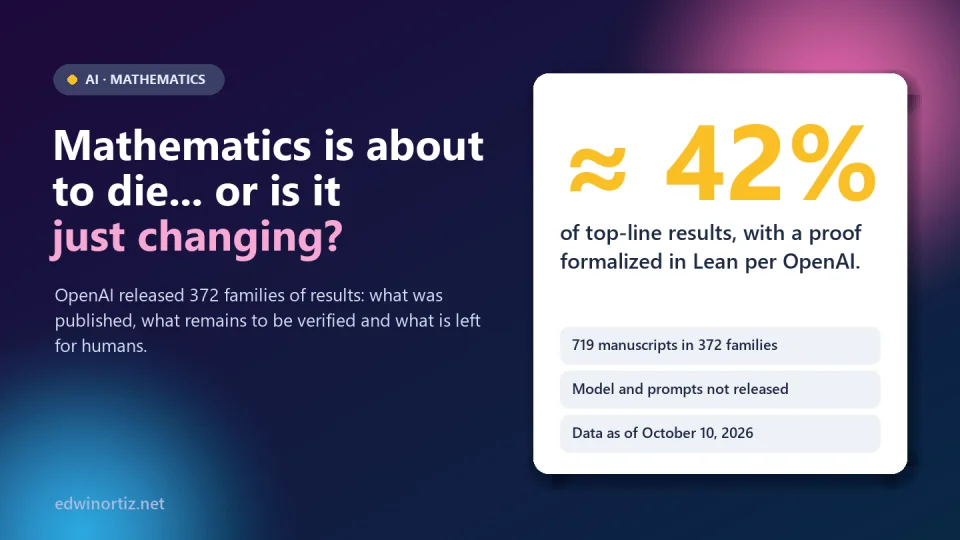
On October 6 OpenAI published 372 families of mathematical results from an internal model. What was published, what has been verified in Lean, what…
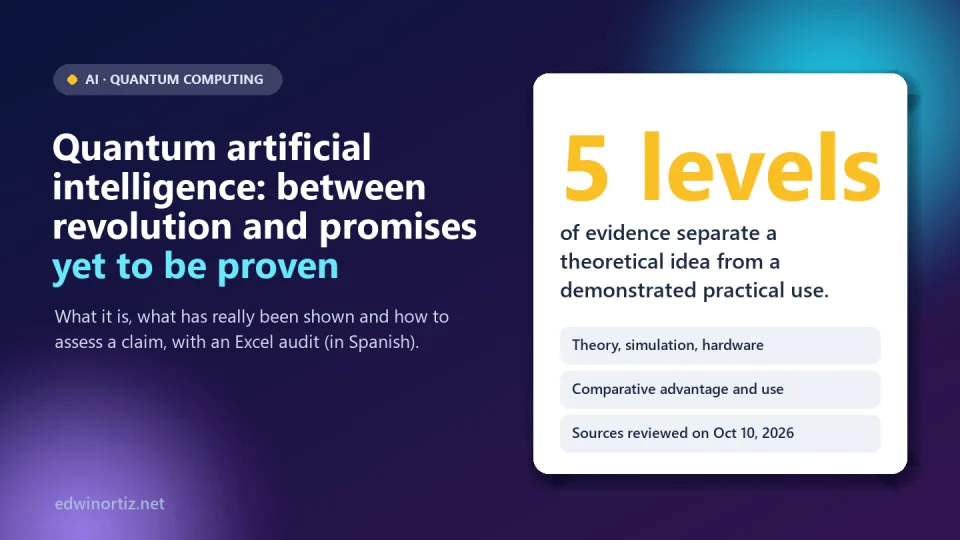
Quantum artificial intelligence combines research in quantum computing and machine learning. What it is, what has really been shown, its limits and…
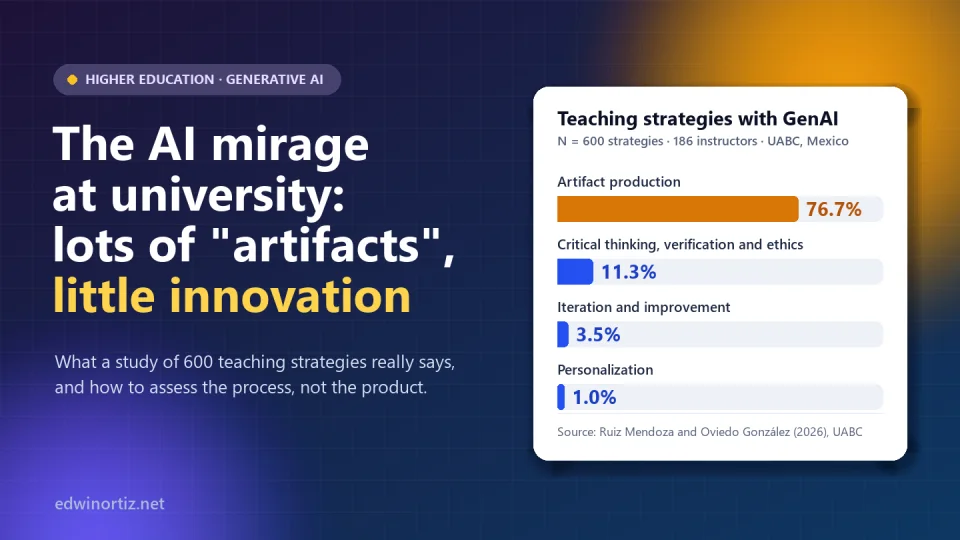
A study of 600 strategies by 186 UABC instructors (Mexico) found that generative AI is used mostly to produce artifacts, and rarely to verify…
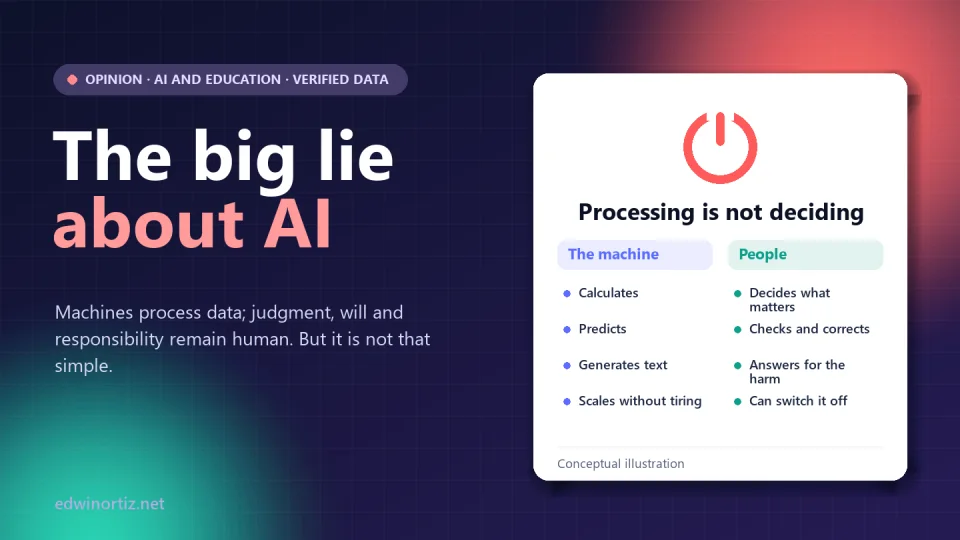
Machines process data and humans remain in command, but the story is not that simple. I check the World Economic Forum figures, daily data and…
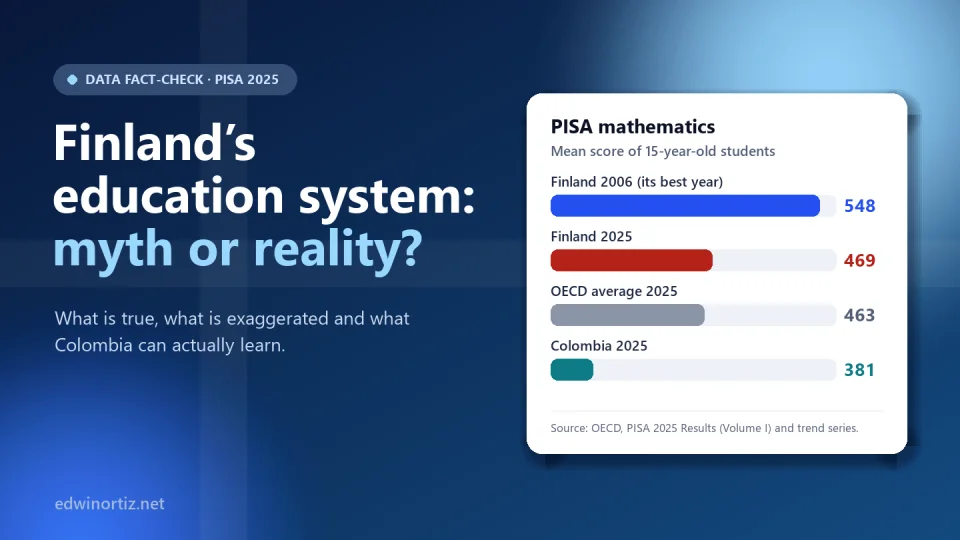
I fact-check eleven popular claims about Finland’s education system with PISA 2025, the OECD and official Finnish sources: what is true, what is…
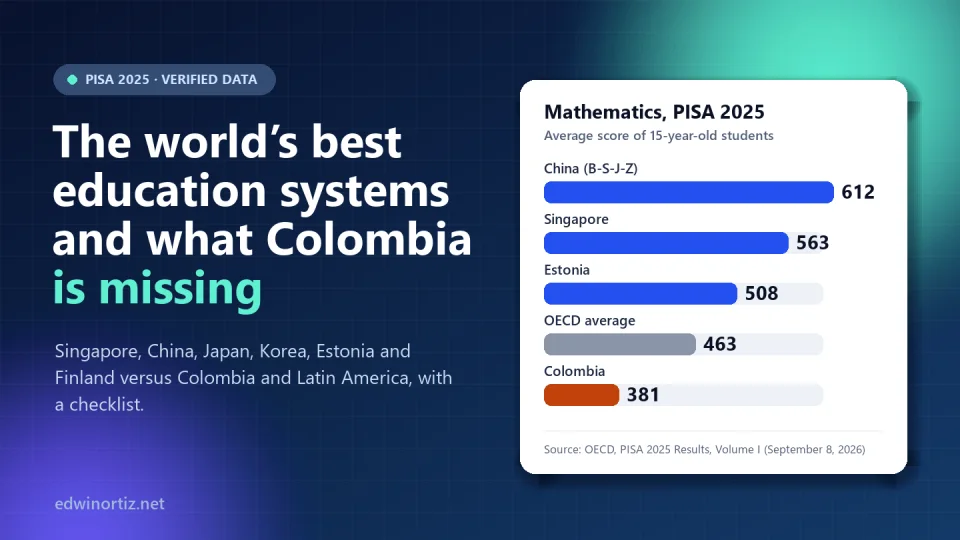
I compare Singapore, China, Japan, South Korea, Estonia and Finland with Colombia and Latin America using PISA 2025, Education at a Glance 2026 and…
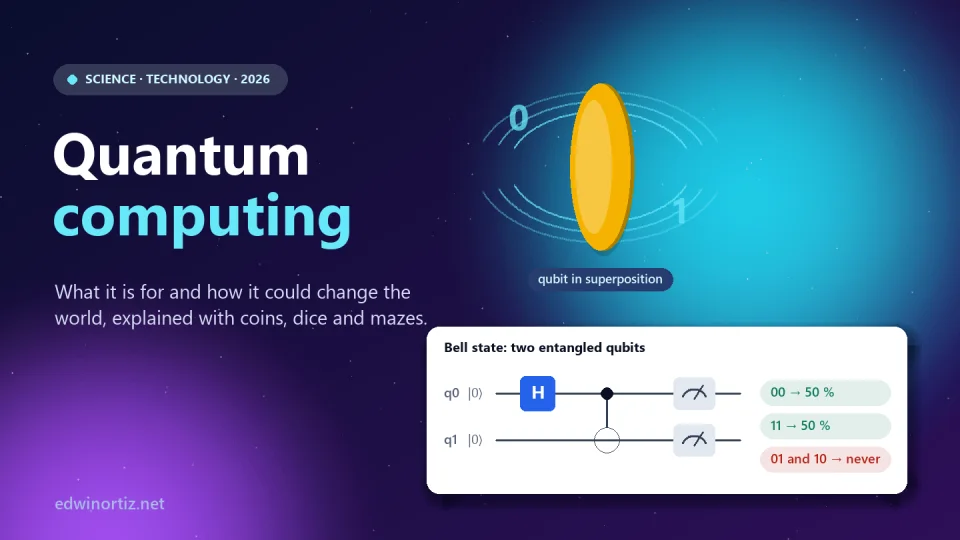
What a qubit is and what superposition, entanglement and interference mean, explained with coins, dice and mazes; what quantum computing is really…
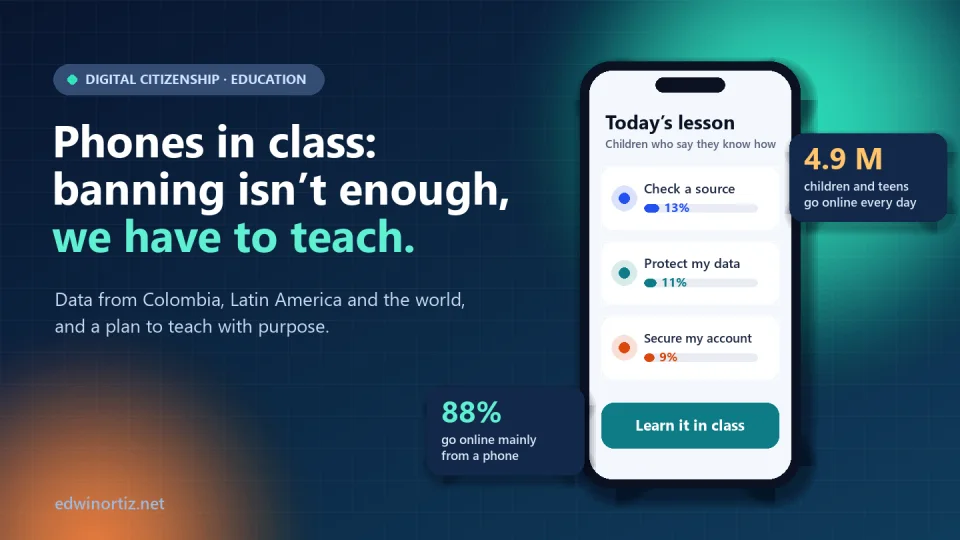
I checked the Javeriana University study on children, phones and online safety in Colombia, and reviewed what happened in the countries that banned…
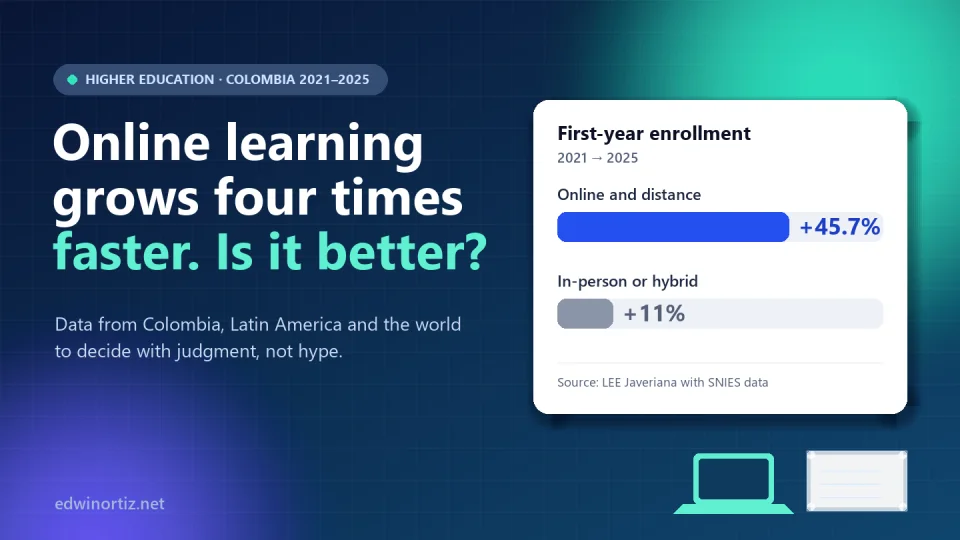
First-year enrollment in online and distance programs in Colombia grew 45.7% between 2021 and 2025, versus 11% for in-person or hybrid programs. I…
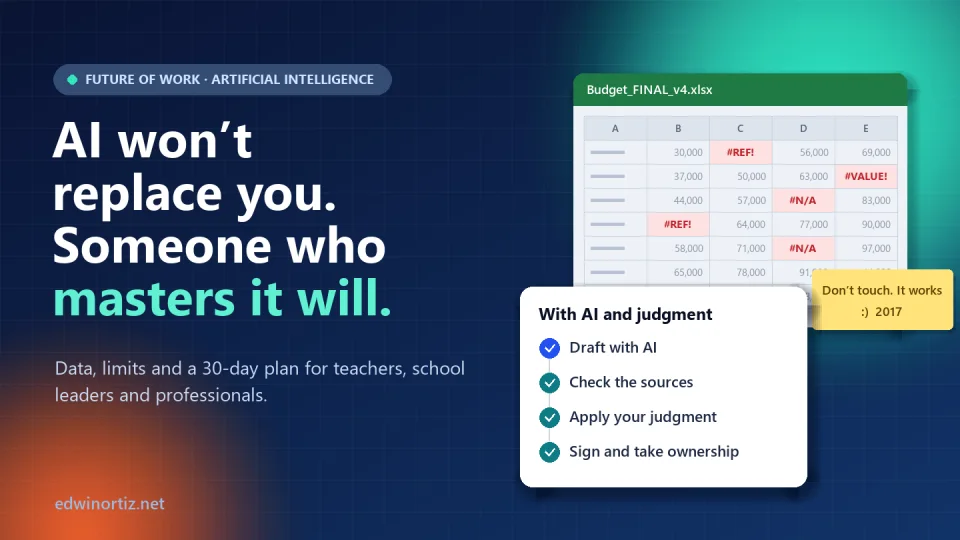
AI rarely replaces professionals on its own: they are displaced by the people and organizations that learn to use it well. I review the data without…
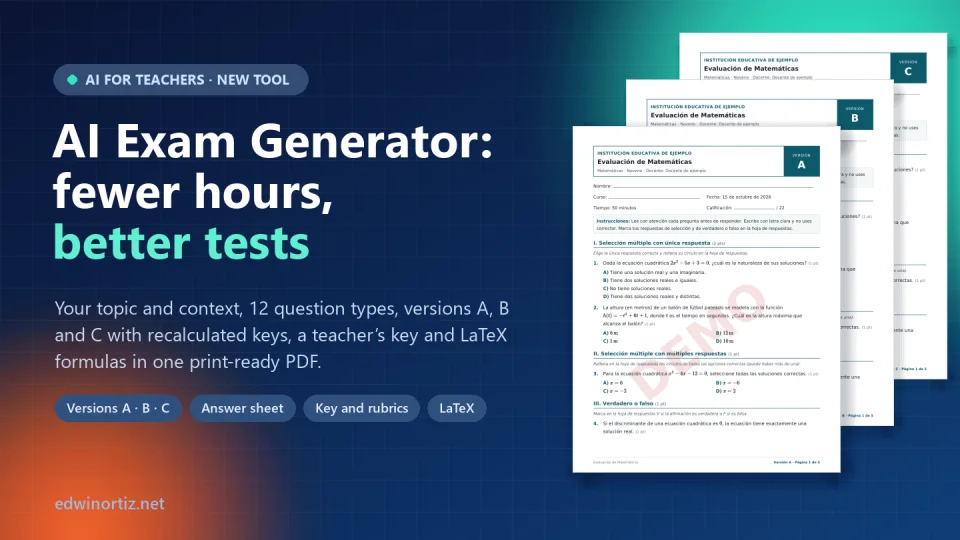
A good exam can’t be improvised on a Sunday night. I review the principles of a valid, fair assessment and show how the AI Exam Generator helps you…
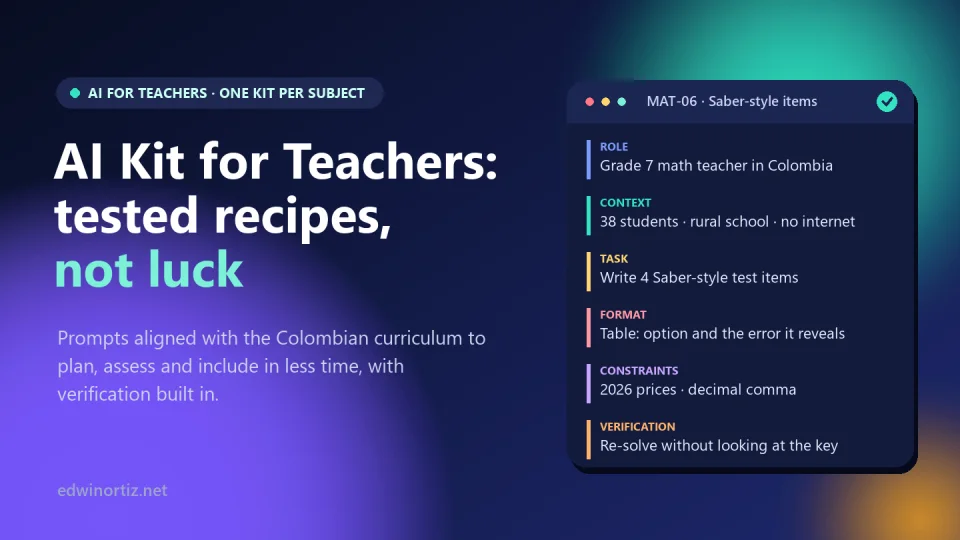
AI can give you back hours of planning, assessment and feedback, but only if you talk to it with a method. I explain what makes a prompt work, where…
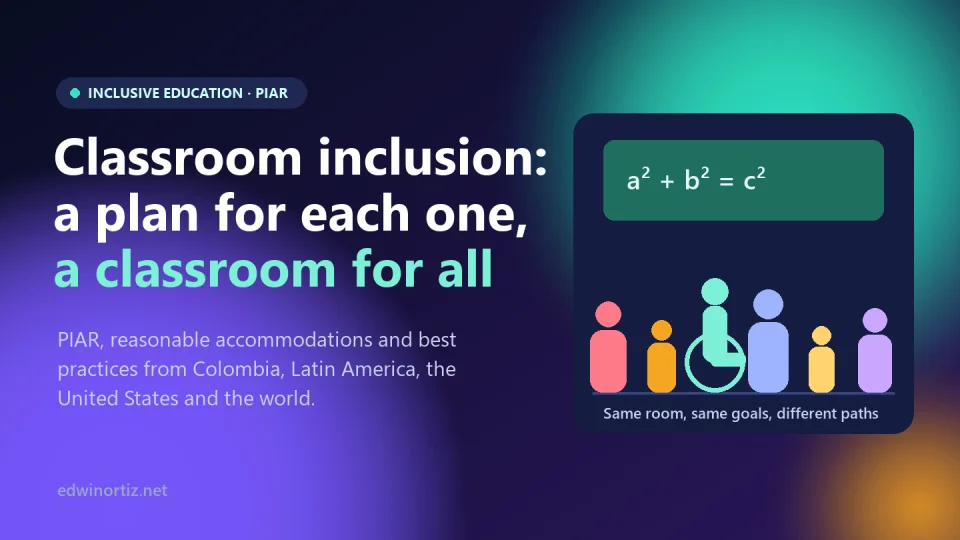
Inclusion is neither a favor nor a form: it is a right that has to be planned. I explain what an effective PIAR must contain, how to work with…
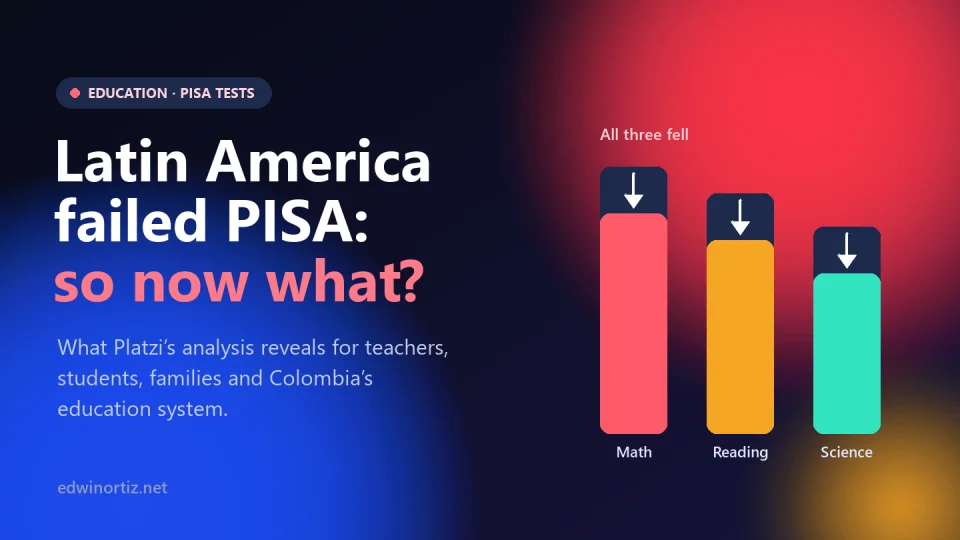
I analyze Platzi’s video on the PISA results: the decline in math and reading, the excuses that fall short, the role of screens and the idea of…
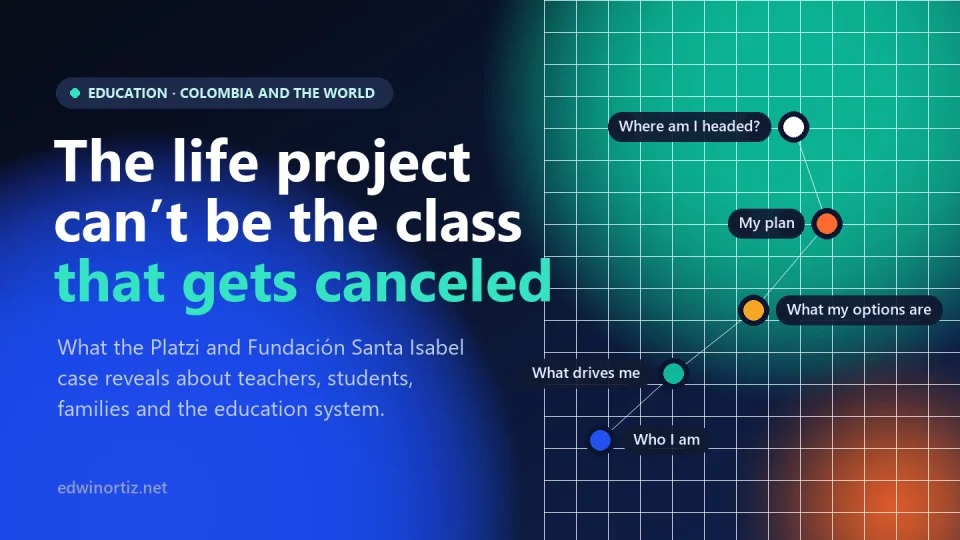
A Platzi video reveals that one in three teachers did not feel prepared to guide their students’ life projects. I analyze it from the classroom, the…
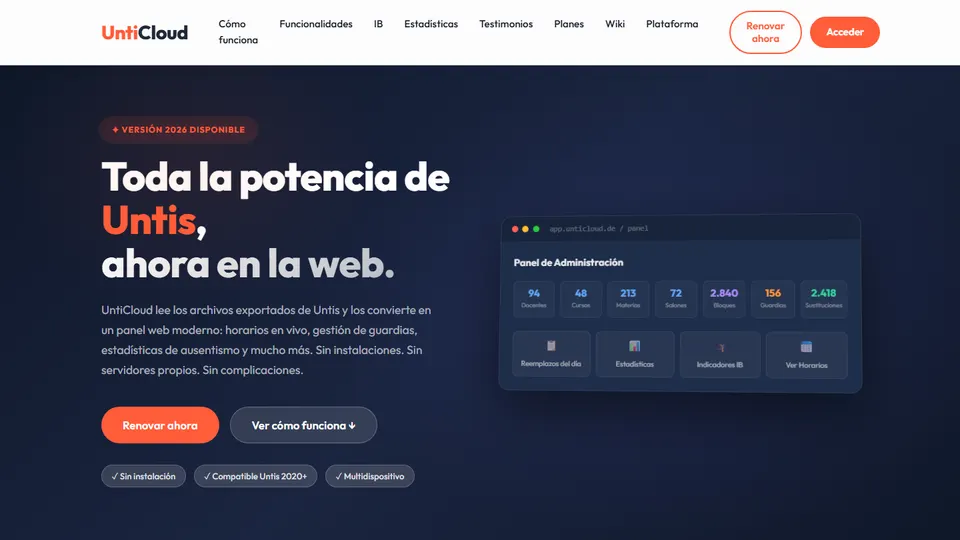
What UntiCloud is, the problem it solves for schools that plan with Untis, and ten practical ideas to help teachers, homeroom teachers and…
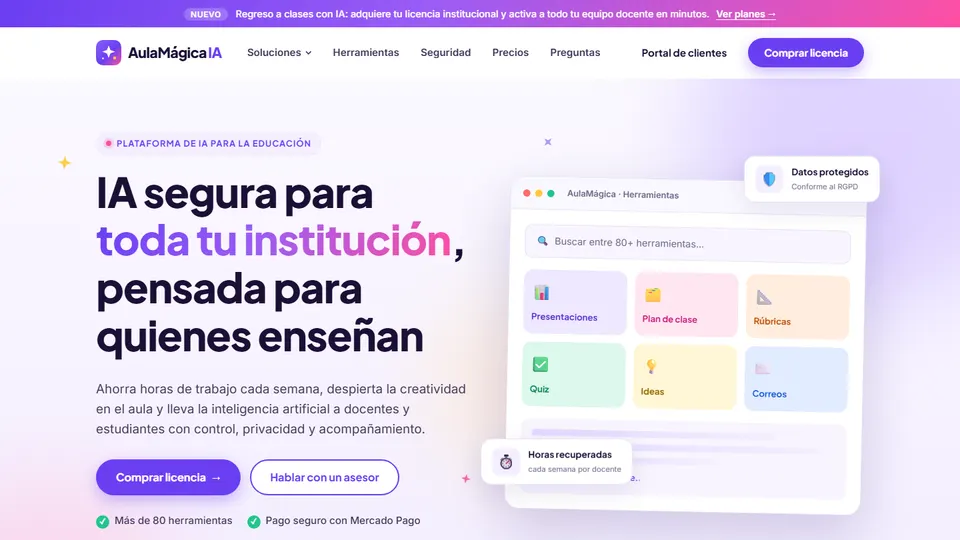
What AulaMágica IA is, how it brings order to the use of artificial intelligence at school, and twelve concrete ideas for planning, assessing…
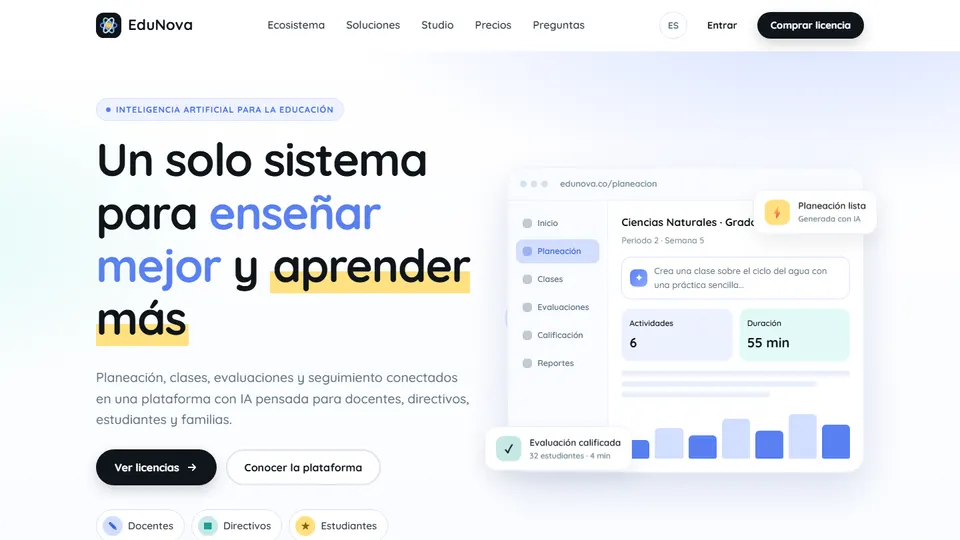
What EduNova is, how it connects the full learning cycle in eight modules, from the textbook to the report card, and ten concrete ideas for using it…
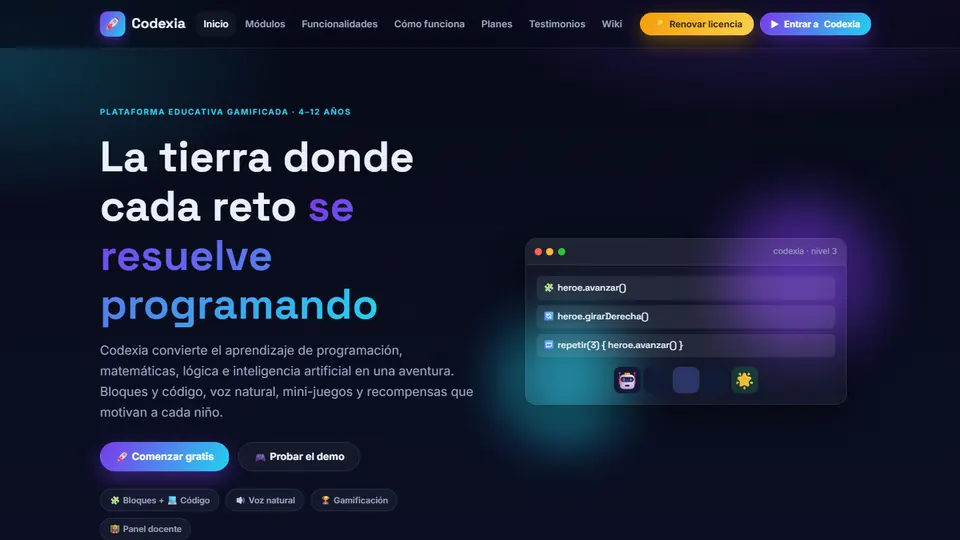
What Codexia is, what it offers schools and ten concrete ideas for using it in preschool and elementary school, connecting coding with math…
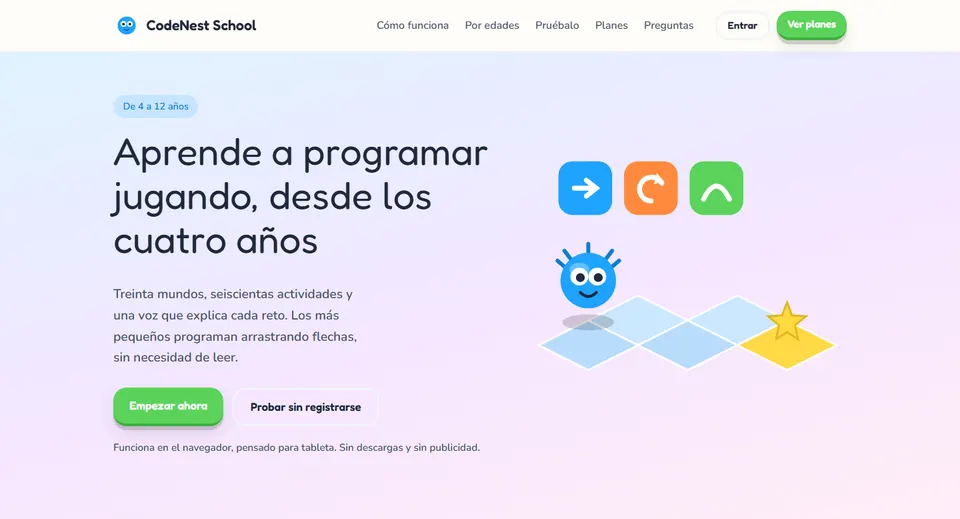
What CodeNest School is, how it teaches coding from age four without requiring children to read, and ten practical ideas for using it in preschool…
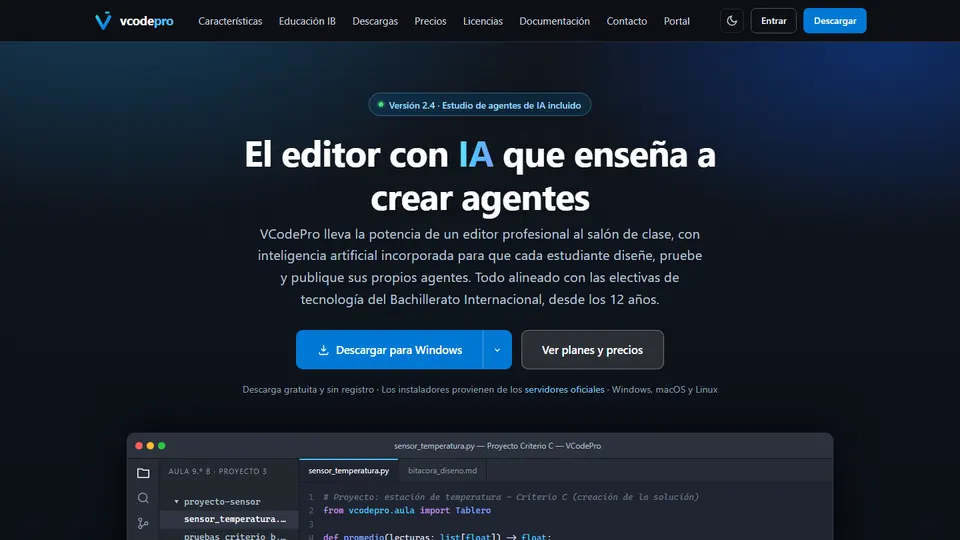
What VCodePro is, the problem it solves, and 9 concrete ideas for teaching programming and building AI agents with secondary school students from…
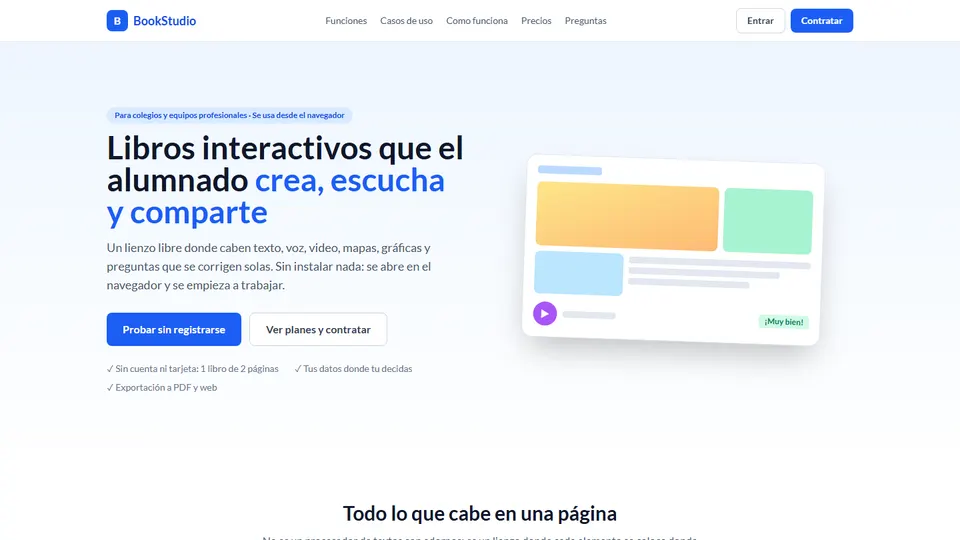
What BookStudio is, how it works, and 10 ideas for your students to create interactive books with voice, video, maps, charts and self-grading…
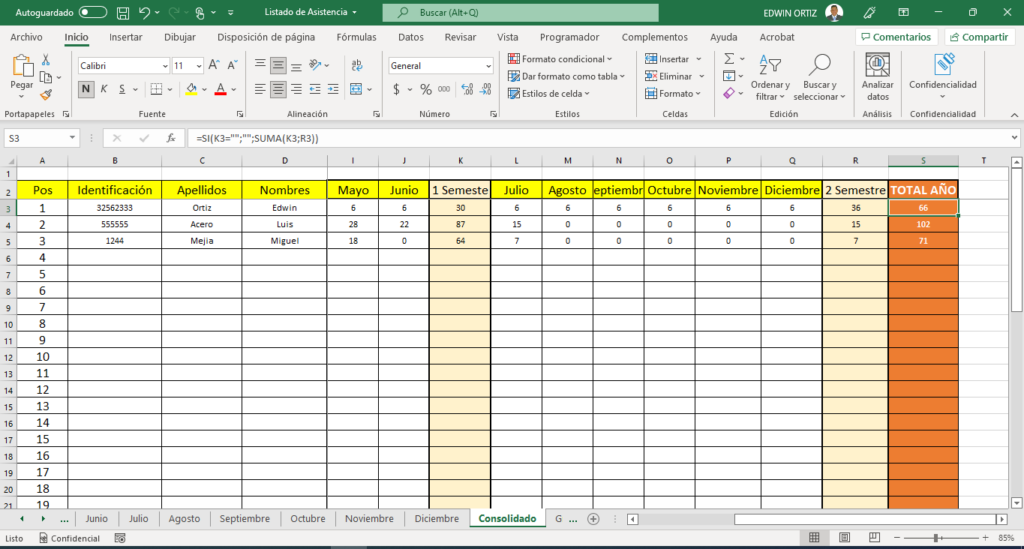
Excel template to track employee or student attendance, with summaries by person and by month, plus charts…
$10
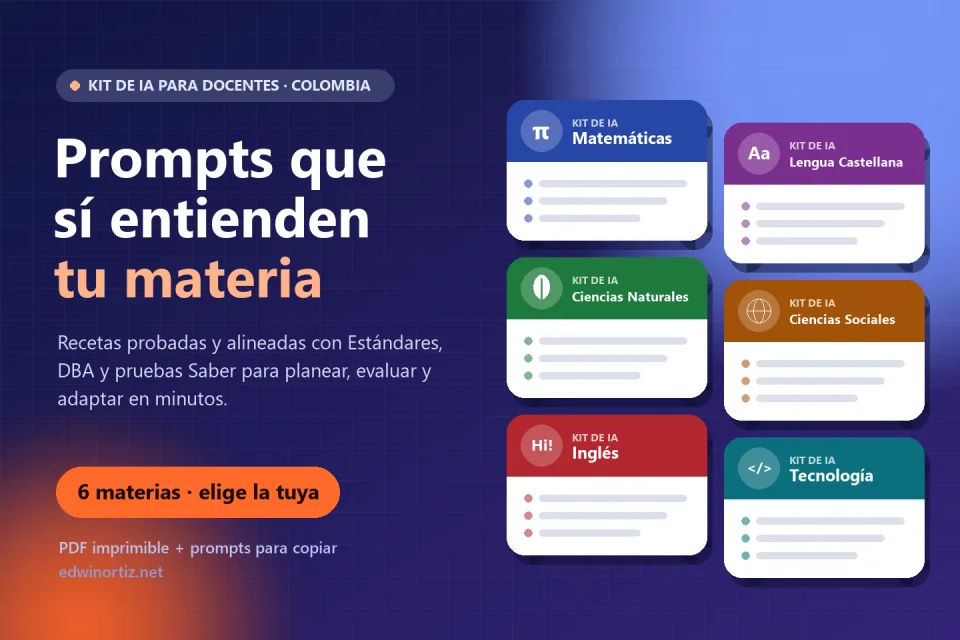
Tested prompt recipes to plan, assess and adapt your lessons with AI, aligned with the Colombian curriculum…
$15
Choose subjectYes, as support for ideas, examples and first drafts. Always review the result: AI makes mistakes and doesn’t know your group.
No. The guides are written for teachers of any subject and explain every step.
Every two weeks, one email with new guides on the topics you choose, free tools and templates. No spam.